
Data centres are now a regular part of public debate. The growth of artificial intelligence, the UK government’s decision to classify data centres as critical national infrastructure, and wider concerns around energy, water and resource use have all brought the sector into sharper focus. With any fast-moving topic, misleading claims can spread quickly. Data centres are no exception. As a contractor with three decades of experience in the data centre market, we believe it is important to add context, challenge common misconceptions and do a bit of data centre mythbusting.
Myth 1: “Data Centres Are Draining Local Water Supplies”
Data centres do require cooling, but their impact on local water supplies depends on how they are designed and operated.
Depending on the facility and its requirements, data centres may use air cooling, chilled water systems, water-source cooling or emerging technologies such as liquid-to-chip cooling. Some systems are completely water-free. The right solution depends on factors including efficiency, sustainability, location and the density of the IT equipment being supported.
In the UK, 51% of data centres use waterless cooling, while 64% consume under 10,000m³ of water per year. This is less than many other common water users, including typical golf courses, farm irrigation systems and leisure centres.
Many data centres use alternative water sources to freshwater, such as treated wastewater, reclaimed water, or brackish groundwater that is unsuitable for drinking. Some operators are also investing in water replenishment projects to offset or exceed the amount of water they consume.
Innovative cooling technologies are also helping operators reduce their reliance on conventional cooling methods. At Digital Realty’s Cloud House in London, for example, Gratte Brothers installed a pioneering dock water cooling system that uses water from the nearby Millwall Inner Dock as part of the cooling process. The system is around 20 times more efficient than conventional cooling methods, with sensors and controls ensuring only the required volume of water is drawn to help minimise waste and energy consumption.
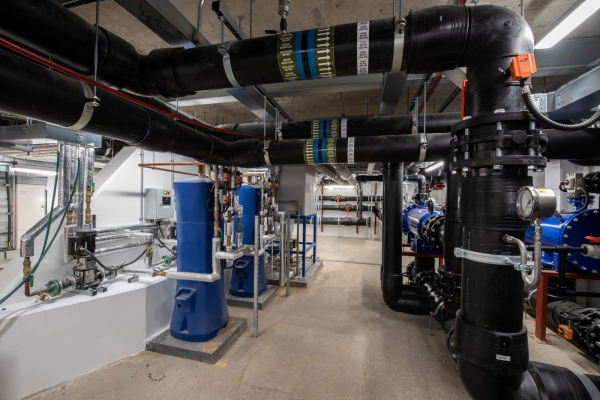
The dock-water cooling system at Digital Realty’s Cloud House
Myth 2: “Data Centres Are Noisy Neighbours”
Early data centres often prioritised function over appearance and community integration. Today, however, new data centres are designed to meet strict environmental noise requirements. Operators use acoustic enclosures, noise barriers, low-noise cooling equipment and carefully planned site layouts to minimise impacts on surrounding communities.
Noise inside a data hall can reach 92–96 dB(A), which is comparable to a lawnmower or motorcycle. However, modern data centres are typically designed so external noise levels at or near the site boundary are around 60 dB(A) or lower, which is comparable to normal conversation or background urban noise.
Myth 3: “Data Centres Don’t Benefit Local Communities”
Data centres bring a whole host of benefits to local communities and economies. They create construction and engineering jobs, attract investment and generate significant amounts of tax revenue, while providing the digital infrastructure that businesses, public services and individuals rely on every day.
A common concern is whether the jobs created during construction lead to long-term employment. While construction programmes can run for three to six years and operational teams are typically smaller once a facility is complete, data centres still require permanent teams to support day-to-day operations.
It is true that data centres typically employ fewer people on-site once operational than during construction, and their permanent workforce can be relatively small compared with the scale of the development. This has led to legitimate questions about employment density and land use.
However, permanent on-site employment is only one measure of economic impact. Data centres can also support specialist roles across engineering, maintenance and security, create demand throughout local and national supply chains, generate tax revenues and enable the digital infrastructure relied upon by businesses and public services.
According to techUK, data centres currently contribute £4.7 billion in Gross Value Added (GVA) to the UK economy each year, support 43,500 jobs and generate £640 million in tax revenue for the Exchequer. By 2035, the sector could contribute £44 billion to the UK economy.
Myth 4: “Data Centres are only used for AI”
Artificial intelligence is only one of many workloads supported by data centres. Long before AI became widespread, data centres powered the services people use every day, including email, cloud storage, video streaming, online banking, websites and communications platforms.
Without them, the impact would be felt almost immediately. Within minutes, services such as messaging platforms, email and online banking would begin to be disrupted. Within hours, the effects could extend to transport, communications and operational systems. Within a day, essential services such as energy networks, healthcare and public services would face significant pressure.
AI workloads are increasing and will continue to shape the way we work, much like the internet transformed business during the dot-com era. However, data centres remain far broader than AI. They underpin the digital services used by businesses, government and individuals every day.
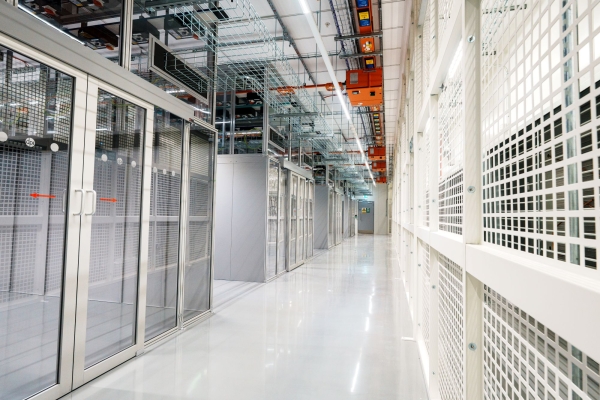
Without data halls like this one, our digitally-integrated lives would be impossible.
Myth 5: “The Cloud is Invisible and Doesn’t Take Up Space”
Not quite.
A few years ago, we published an article that discusses What the Cloud Really Looks Like. In short, the cloud refers to data that is stored remotely rather than on your own device, allowing you to access files, photos and applications from anywhere with an internet connection.
Every time someone streams a film, backs up a photo or uses an online application, that data is processed, stored or managed in a physical data centre containing servers, cabling, power systems, cooling equipment and network infrastructure.
While the term cloud can make it sound intangible, the reality is that it is a large network of physical computers, servers and networking equipment housed in data centres around the world.
Conclusion
As data centres become more prominent in public discussion, it is right that questions are asked about energy use, water consumption, planning, community impact and long-term value. These are important topics, and the industry has a responsibility to address them clearly.
At the same time, those conversations need to be based on accurate information. Data centres are critical infrastructure. They support healthcare, financial services, communications, transport, public services and the digital tools that businesses and individuals rely on every day. By sharing the facts behind them and doing a bit of data centre mythbusting, we can help create a more informed conversation about the role data centres play in modern society, and how they can continue to develop responsibly.
This blog was written in collaboration with our marketing work experience intern, Ella Blomeley. Our thanks go to Ella for her valuable contributions.